Hindustan Petroleum, Bharat Petroleum and Indian Oil lost ₹26,026 crore before tax in April–June with Brent crude at $97 a barrel; it averaged $91 in July–September, and two private rivals have begun rationing diesel.
Hindustan Petroleum lost ₹17,446 crore, 12 paise on every rupee of sales; Bharat Petroleum ₹5,305 crore, 3 paise; Indian Oil ₹3,274 crore, 1 paisa. None of it is a one-off item, their filings show. A year earlier the three earned ₹21,387 crore between them.
The cause is a pump price that does not follow crude. Petrol and diesel rose about ₹7.50 a litre in May and have not changed since, Mint reported, while crude has been dear since the conflict in West Asia cut supply this year. At September's prices the three were losing ₹9 on a litre of diesel, ₹8 on petrol and about ₹300 on a cooking-gas cylinder, or ₹530 crore a day, rating company ICRA estimated on 23 September, Business Standard reported. ICRA put their accumulated shortfall on cooking gas at ₹61,940 crore on 30 June.
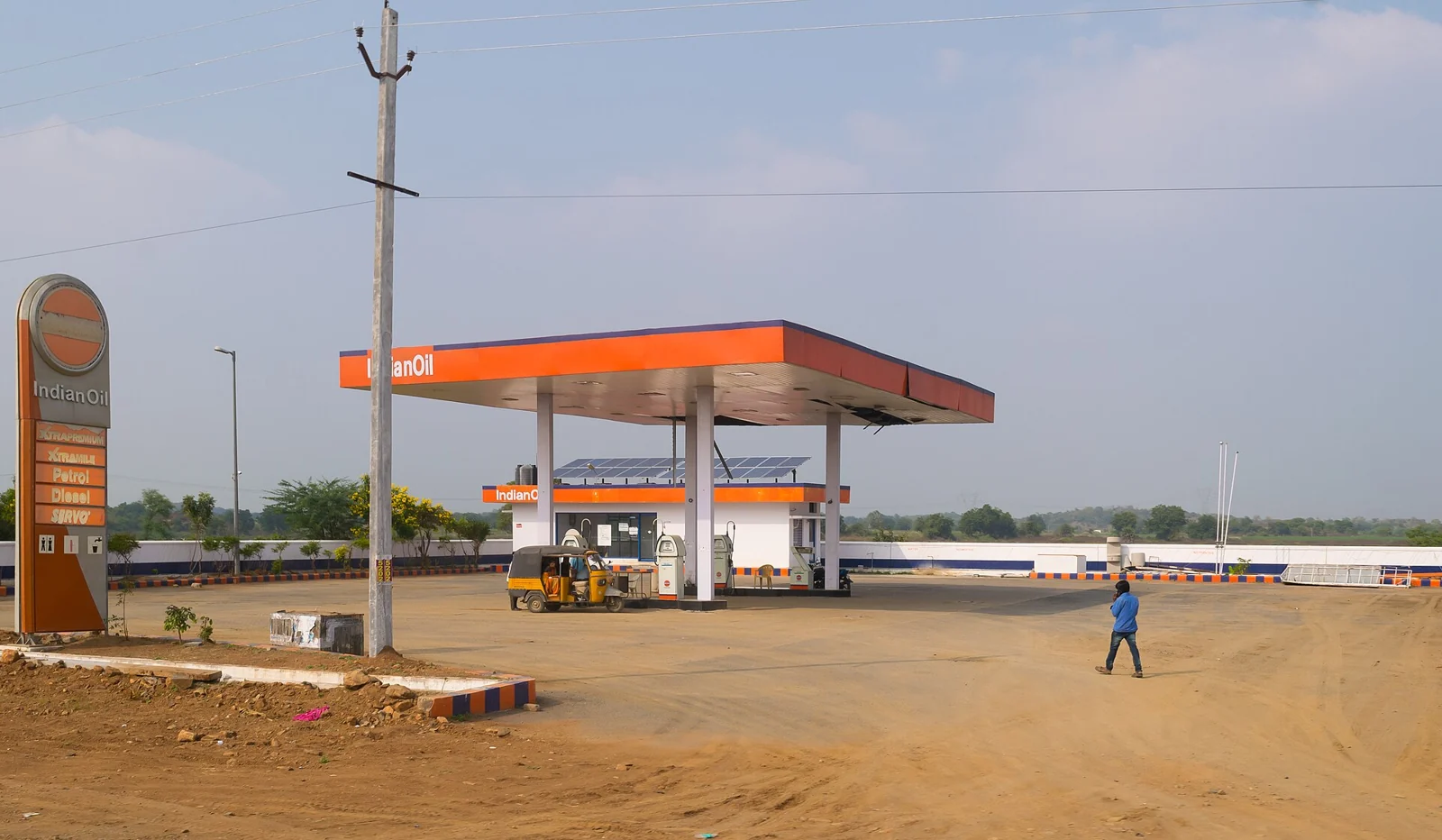
For shareholders the frozen price means the cost of crude stays with the three, which run nine of every ten of India's 1,04,069 fuel stations, by PTI's count. For lenders it shows in cover: Hindustan Petroleum's interest over the four quarters to June, ₹3,397 crore, was twice its operating profit, against a fifth a year earlier.
Private sellers have limited sales instead. Jio-bp, the venture of Reliance Industries and BP with 2,227 pumps, capped diesel at 50 litres a customer a day, and Nayara Energy, with 7,105, at between 70 and 200 litres, to limit losses on fuel sold below market rates, the Economic Times and Business Standard reported. The trigger was factories, telecom companies and other bulk users, who pay as much as ₹40 a litre more for diesel bought in bulk, filling up at retail pumps. "Nobody is allowed to put a cap on sales," Petroleum Secretary Neeraj Mittal said on 1 October, according to BusinessLine. "We will tell them that it is not acceptable, it is not done." His ministry is separately rewriting the penalties for breaking licence terms: a draft Petroleum (Amendment) Bill proposes civil penalties of up to ₹2.5 crore for a first breach, Mint reported.
Upstream, the same crude price is profit. Oil and Natural Gas Corp. and Oil India earned ₹26,590 crore before tax in April–June, up from ₹11,842 crore a year earlier. ONGC owns a majority of Hindustan Petroleum, so while its own pre-tax profit more than doubled to ₹22,848 crore, its group profit, which includes the retailer, fell 59% to ₹6,415 crore.
| Profit before tax, ₹ crore, standalone accounts | Apr–Jun 2025 | Jan–Mar 2026 | Apr–Jun 2026 | Jul–Sep 2026 |
|---|---|---|---|---|
| State fuel retailers | ||||
| Indian Oil | 7,405 | 15,322 | −3,274 | not yet filed |
| Bharat Petroleum | 8,157 | 4,258 | −5,305 | not yet filed |
| Hindustan Petroleum | 5,826 | 6,550 | −17,446 | not yet filed |
| Three together | 21,387 | 26,130 | −26,026 | |
| Oil producers | ||||
| ONGC | 10,744 | 8,524 | 22,848 | not yet filed |
| Oil India | 1,098 | 2,057 | 3,742 | not yet filed |
| Two together | 11,842 | 10,581 | 26,590 | |
| Refiners | ||||
| Reliance Industries | 20,306 | 9,783 | 17,600 | not yet filed |
| Mangalore Refinery and Chennai Petroleum | −483 | 3,126 | 2,580 | not yet filed |
| Fuel buyer | ||||
| InterGlobe Aviation | 2,295 | −2,490 | −382 | not yet filed |
| Brent crude, average $ a barrel | 66.5 | 78.6 | 96.9 | 90.7 |
Totals are of unrounded figures.
Refiners with few pumps of their own made money. Mangalore Refinery and Chennai Petroleum earned ₹2,580 crore before tax between them, against a loss of ₹483 crore a year earlier. Reliance's standalone accounts, which leave out telecom and retail but hold more than refining, show ₹17,600 crore, 13% less than a year earlier. Fuel exports carry a levy of ₹16 a litre on diesel and ₹10.50 on jet fuel for the fortnight to 15 October, cut from ₹20 and ₹15, Business Standard reported.
The frozen pump price shields the largest buyer. Road transport spends 55% of its input bill on fuel, according to India's official supply-use tables for 2023-24, which record what each industry buys from every other, and almost none of that industry is listed. Buyers outside the pump price are paying more: bulk diesel users by as much as ₹40 a litre, and airlines ₹137 a litre for jet fuel from 1 October, up ₹16. Jet fuel is up to 40% of an airline's operating costs, Business Standard reported; InterGlobe Aviation, which runs IndiGo, lost ₹382 crore before tax in April–June.
Saudi Aramco has stopped crude supplies to Indian refiners after attacks on its East-West pipeline, the Economic Times reported on 24 September. Russia has extended its ban on diesel exports to 31 October, and Chinese refiners have suspended fuel exports for October, with no word on whether they resume when the country's holiday ends on 7 October, Mint reported. In rupees, a barrel of Brent costs about 73% more than a year ago.
Diesel sales in August were 6.5% higher than a year earlier, against 9.4% in July, and petrol sales 7.9% higher, against 8.6%, oil ministry data show. Cooking-gas sales were 16% lower.
Still, three things soften the picture. The May rise in pump prices covered only part of April–June and all of July–September. Brent averaged $91 in July–September against $97, though September alone averaged $100. And the retailers also refine: Singapore refining margins have held above $10 a barrel since the West Asia crisis began, ICRA said.
What to watch
| Date | What happens |
|---|---|
| 7 October | China's holiday ends; whether its refiners resume fuel exports is not known. |
| 15 October | the current fortnight for the export levies on diesel and jet fuel ends. |
| 30 October | comments close on the draft Petroleum (Amendment) Bill. |
| 31 October | Russia's ban on diesel exports runs to this date. |
Data note: Profit before tax is as filed, by quarter, in each company's standalone accounts; on group accounts the three retailers lost ₹23,446 crore in April–June, and ONGC's group figure is from its consolidated accounts. Brent averages are of daily closes; operating profit is total income less total expenses, plus finance costs. That ONGC owns a majority of Hindustan Petroleum is public record rather than a figure from Kiwaro's data, and pump prices, station counts and ICRA's estimates are as reported by the outlets named.