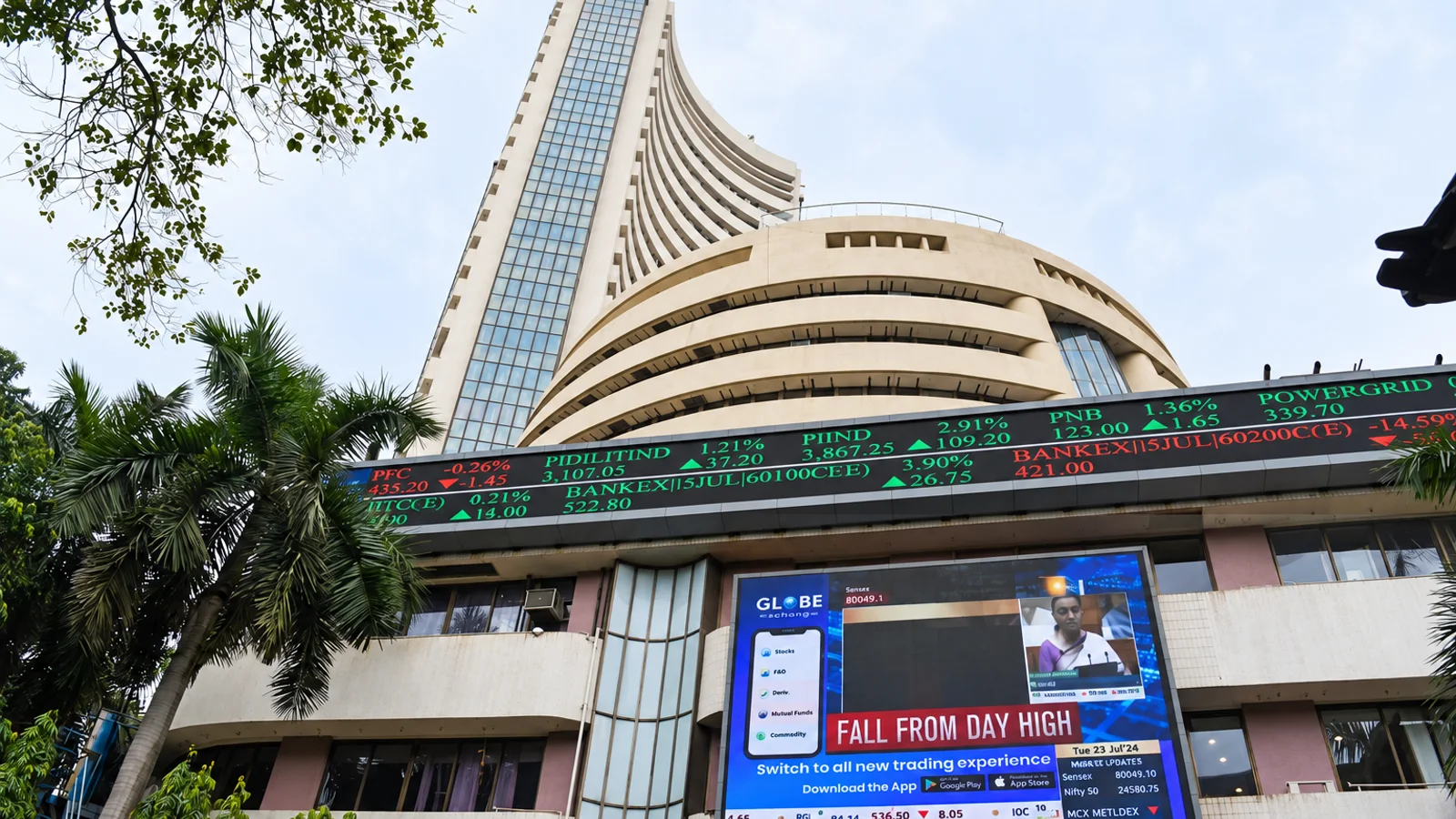
India’s smallcaps are on course for their worst October since 2008. The Nifty Smallcap 250 has fallen 7.9% this month, the steepest October decline since the 32.2% collapse of 2008, and it now stands 1.8% below where it began the year and 11.6% under its 8 September peak.
Foreign selling is part of it. Foreign portfolio investors sold a net ₹49,870 crore of Indian shares between 1 and 21 October, NSDL data show. A second trail, and the one that explains why the smallest companies fell hardest, runs through the price of overnight money.
On 13 October the central bank sold ₹25,000 crore of government bonds, taking cash out of the banking system. Banks were reportedly told to keep 99% of their required cash reserve every day from 16 October, up from 90%. The overnight rate at which banks lend to one another averaged 5.37% in October so far, up from 4.99% in September, and on 22 October it reached 5.69%, above the 5.50% repo rate. On 21 October the central bank accepted no bids at all at its Treasury bill auction.
Then it turned. Since 19 October the central bank has lent ₹2,50,030 crore back through four repo auctions, the latest ₹50,003 crore for three days on 23 October at a cut-off of 5.58%. Banks bid for up to 3.2 times what was on offer. A central bank that drains cash one week and lends it back the next is telling the market that the squeeze went further than it wanted.
Why the smallest companies feel it first
Smallcaps are where borrowed money buys shares, where trading is thinnest, and where a few sellers move prices furthest. When cash gets dearer, leveraged positions are cut first, and in thin markets their exit moves prices more than the same selling would in the largest companies.
The record points the same way. Over 178 months since 2011, each one-point rise in the monthly average overnight rate has been followed within six months by a 7.5% fall in smallcaps, against 3.9% for the Nifty 50. The link is loose from month to month, but the ranking is clear: the price of cash bites small companies about twice as hard.
History also shows what tends to follow a month like this one. Since 2005 the Nifty Smallcap 250 has fallen 8% or more in a single month 28 times. The month after, it typically slipped a further 1.3%; three months on, it was higher in 15 of those 28 cases. A fall of this size has been as often a pause as a beginning.
What to watch
26 October: ₹1,50,017 crore of the central bank’s repo lending falls due, the seven-day loan of 19 October and the three-day loan of 23 October. Whether it is rolled over decides whether that cash stays in the market or drains out again.
The overnight rate: back below the 5.50% repo rate, the squeeze is easing; above it, it is not.
The next weekly Treasury bill auction: after accepting no bids on 21 October, it shows whether the central bank still refuses the yields the market asks.
Index figures are closes to 23 October 2026. The overnight-rate relationship is measured on 178 months since 2011; the history of large monthly falls covers the Nifty Smallcap 250 since 2005.
Correction, 26 October 2026: an earlier version took the index’s falls from its intraday low of 23 October rather than its close, giving 8.8% for the month, 2.7% for the year and 12.4% from the peak, and said foreign investors had put a net $2.1 billion into Indian shares. On closes the falls are 7.9%, 1.8% and 11.6%, and NSDL data show foreign investors sold a net ₹49,870 crore between 1 and 21 October.