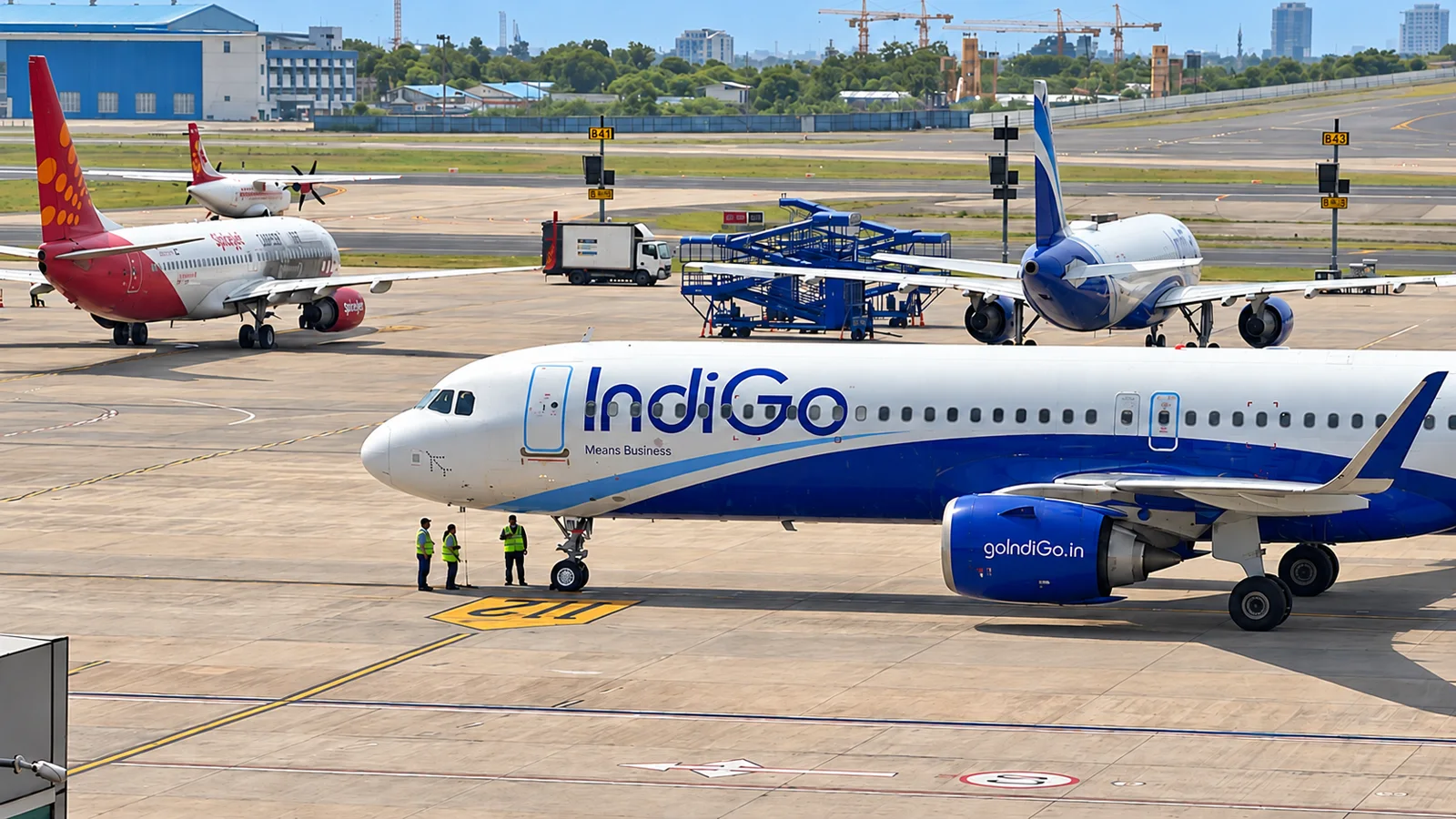
IndiGo lost ₹18,791 million in the three months to 30 September even after lifting its yield 34.3%, as its fuel bill rose 67.2% and the rupee averaged 95.09 to the dollar against 87.06 a year earlier.
“We responded with prudent capacity reduction and yield management, supporting strong revenue performance but only partially offsetting the higher costs,” Willie Walsh, chief executive of InterGlobe Aviation, said in the results statement filed on 29 October. Revenue from operations rose 25.9% to ₹233,638 million, and total expenses rose 18.6% to ₹261,884 million. The loss compares with ₹25,821 million a year earlier, when a foreign-exchange loss of ₹28,921 million weighed on the quarter.
The gap matters because the owners carrying it have changed. Mutual funds held 24.28% of the airline at the end of June, up 7.07 points in a year, a stake worth ₹43,889 crore at the close of 29 October. Foreign institutions cut their holding to 20.32%, down 6.99 points. InterGlobe Enterprises holds 35.69% and Rakesh Gangwal 4.53%, according to the shareholding filings.
The first hop is fuel. The Singapore jet fuel benchmark ran 60% above the same quarter last year, Kiran Thadimarri, the chief financial officer, said in his prepared remarks, and fuel cost per available seat-kilometre rose 68.9% to ₹2.44 from ₹1.45. The wholesale price index for jet fuel stood at 130.8 in September, 77.2% higher than a year earlier, according to DPIIT. That is down from 185.3 in May, but still far above last year.
The second hop is the rupee. IndiGo’s cost per seat-kilometre excluding fuel and forex rose 14.6% to ₹3.45. The company put most of the rise down to a 9% depreciation of the rupee over twelve months, which raises the rupee cost of dollar expenses, along with fixed costs spread over fewer flights and contractual escalations. The forex loss itself fell to ₹13,332 million from ₹28,921 million. Excluding forex, though, the airline lost ₹7,237 million, against a profit of ₹1,039 million a year earlier, and its EBITDAR margin on that basis fell to 15.5% from 20.5%. Stripped of currency, the business moved from profit to loss.
The third hop is the balance sheet, where lessors and banks sit. IndiGo owes about $5.3bn in foreign currency, most of it lease liabilities. Total debt including capitalised operating leases was ₹873,031 million on 30 September, of which leases were ₹551,592 million. Total equity was ₹50,212 million. Six banks carry rated facilities to the airline: Kotak Mahindra Bank ₹1,350 crore, Axis Bank ₹1,200 crore, HDFC Bank ₹1,000 crore, IDFC First Bank ₹700 crore, Yes Bank ₹500 crore and ICICI Bank ₹350 crore. Across the sector, bank credit to aviation reached ₹60,606 crore in August, up 32.2% on a year, according to the Reserve Bank of India.
The last hop is the passenger, who paid twice: a higher fare and fewer seats. IndiGo flew 27.5 million passengers, 4.7% fewer, at a load factor of 80.3%, down 2.2 points. Industry seats ran about 5% lower. Indian airports handled 24.30 million domestic passengers in July and 24.61 million in August, 4.7% and 6.0% fewer than a year earlier, by the Airports Authority of India’s count. International traffic in August was 6.40 million, down 4.0%.
The airports tell a different story because they earn per passenger under regulated tariffs, not on fuel. GMR Airports’ total income rose 12% to ₹4,188 crore and EBITDA rose 2% to ₹1,569 crore. It reported a ₹65 crore profit, its fifth straight positive quarter. Its airports handled 28 million passengers, up 1%, with 18.1 million at Delhi. It used the quarter to cut funding costs. Delhi airport raised ₹35bn of 15-year debentures at 8.71% to refinance US$522.6mn of notes, and GMR Airports raised ₹15bn at 9.56% to replace debt carrying 10.75%. S&P and Fitch lifted Hyderabad airport to investment grade. Aéroports de Paris holds 26.46% of the company and received 102 million new shares in September on conversion of preference shares.
Where the fuel cost goes next depends on crude. Brent stood at $112.30 a barrel at 08:46 IST on Friday, 27% above its August average of $88.19, and the rupee at 95.18 to the dollar. Over the years, a 1% move in Brent has gone with about 0.526% in the wholesale price of mineral oils, the group that holds jet fuel, within six months, give or take 0.129. Over the same horizon, it has gone with about 0.317% in the broader fuel and power index. If the move holds, that points to about 14% more in mineral-oil prices within six months, landing on cost per seat-kilometre just as the festive quarter ends.
The house view is that fares now carry the fuel and owners carry the rupee. IndiGo guides passenger revenue per seat-kilometre more than 25% higher in the December quarter, on the trends it saw in October. It guides full-year cost per seat-kilometre excluding fuel and forex up by high single to early double digits, largely because of the rupee. Pricing can offset the fuel bill. Nothing in the fare offsets $5.3bn of dollar leases, and Indian mutual funds have taken on more of that position over the past year as foreign holders reduced theirs.
Still, the airline enters the peak season with free cash of ₹399,290 million. Its ex-forex EBITDAR was ₹36,153 million for the quarter, and passenger revenue per seat-kilometre rose 31%, above its own guidance of more than 25%. The reported loss narrowed from a year earlier, and the jet fuel price index is well below its May peak.
IndiGo ends its widebody damp-lease flying on 1 November and starts daily Mumbai to Dar es Salaam services the same month. AERA has three months from the tribunal’s judgment on Delhi airport’s tariff, announced on 20 September, to apply it unless it is appealed.