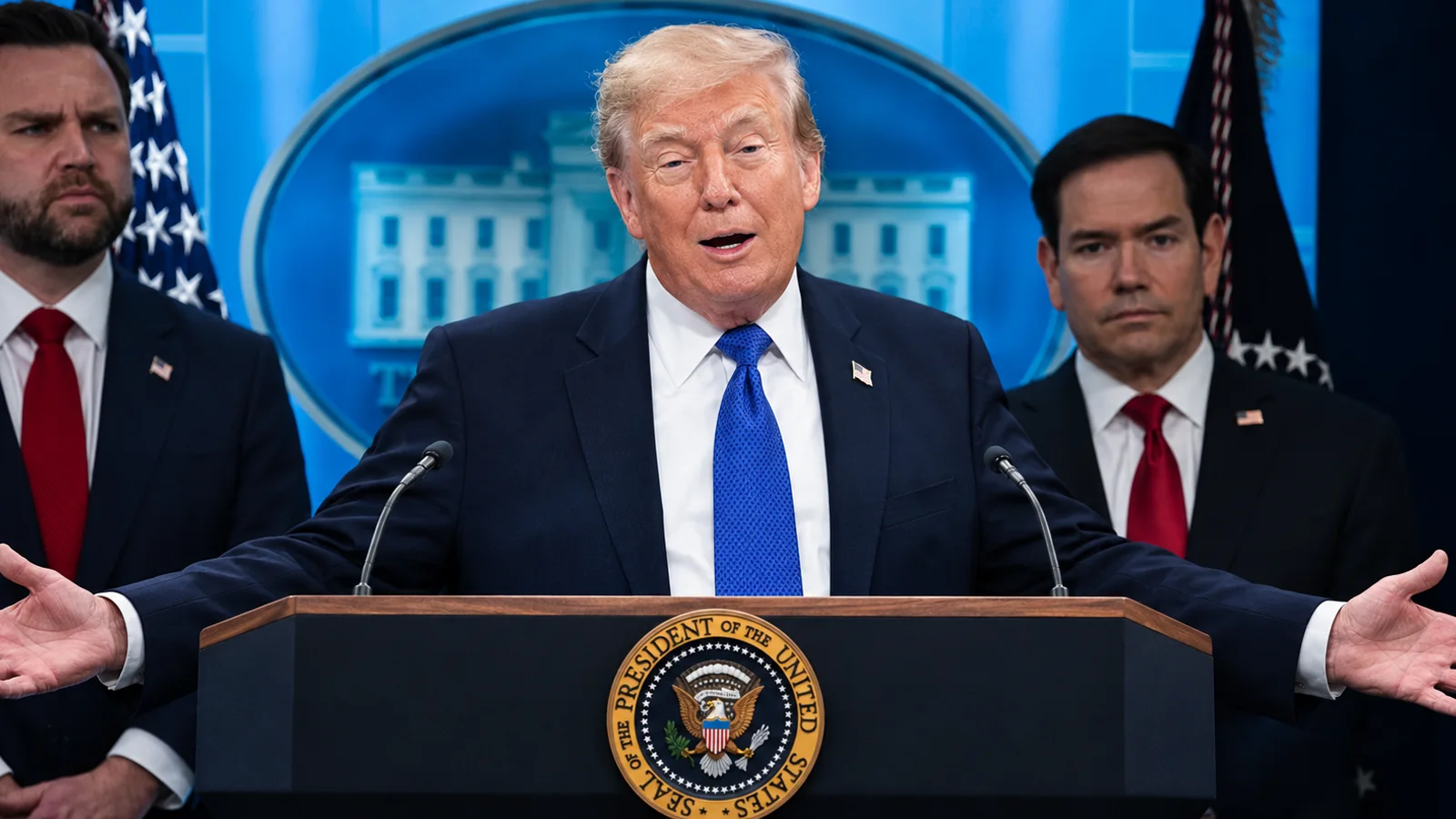
President Donald Trump has told American technology companies that building data centres abroad will cost them. "We’re not going to allow companies to build data centers in other countries," he said at the White House on Friday. "If they do that, they can. But we’re going to put a tremendous tax on them." He named no rate, no companies and no date, and said his own officials were hearing it for the first time: "I haven’t even said that to my people."
As law, the threat is nothing yet. As a signal, it is worth reading carefully, because it exposes the tension at the centre of America’s AI build-out. Washington wants the computing capacity. Many of its voters do not want the buildings. Data centres were a running issue in this month’s midterm elections, which handed Congress to Democrats promising tougher rules on the power-hungry sites at home. Capital has responded the way capital does, by looking for power, land and permits elsewhere, and India is among the most courted places. The tax is an attempt to raise the price of leaving without fixing the reasons for leaving.
The rule Washington has actually written tells a different story, and a better one for India. Export controls issued by the Commerce Department on 16 November require a licence for advanced American chips sent to data centres anywhere that rent large amounts of computing power to companies from China and other restricted countries. They also put five countries on the licence list because chips could leak onward from them: Indonesia, Malaysia, Singapore, Thailand and Brazil. India is not among them. Its data centres can keep buying American hardware for ordinary customers, while its closest rivals for this capital in Southeast Asia now need a licence, unless the buyer is an American company. In the places Washington worries about most, American ownership has become a passport for chips. The president’s tax would turn that passport into a penalty. Until one of the two gives way, companies are reading opposite signals from the same government.