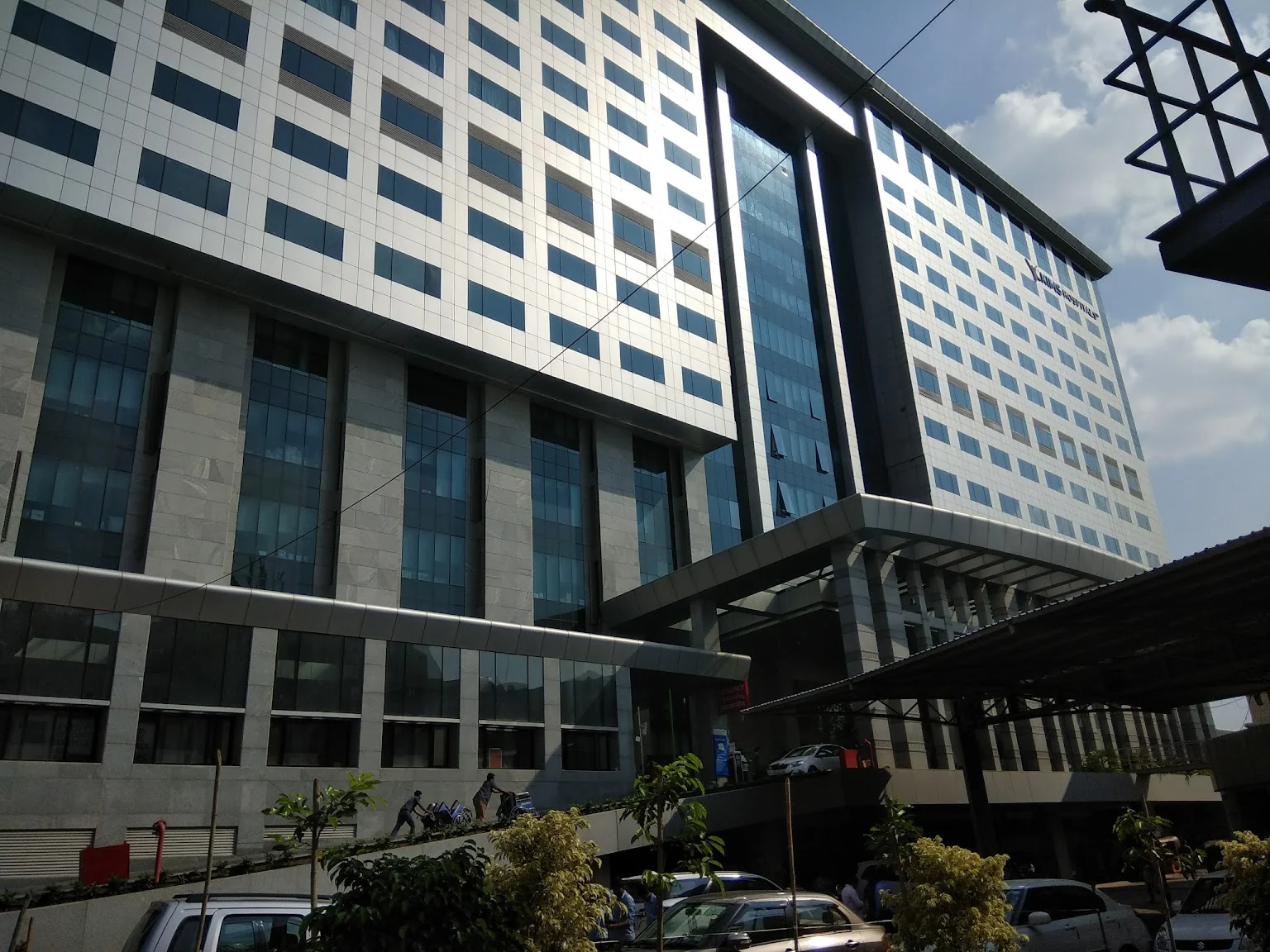
India's Supreme Court has asked why the price of every medicine should not be capped at 16% above what the retailer pays; KIMS, a hospital chain, drew ₹1,202 crore, 31% of its revenue, from its pharmacy in the year to March.
Krishna Institute of Medical Sciences, as KIMS is formally known, reported pharmacy income 29% higher than the year before, its annual report shows. In the same year the whole group used ₹809 crore of drugs, consumables and surgical instruments. The pharmacy line alone exceeds that by ₹393 crore, a markup of at least 48% over cost.
If the 16% were measured from what KIMS itself paid and applied to everything its pharmacy sells, those goods would fetch ₹938 crore, which is ₹264 crore less than the pharmacy line. KIMS's profit before tax was ₹334 crore, 40% lower than the year before. The sum is Kiwaro's arithmetic on the report's figures, not an estimate of what a ruling would cost.
The court has ordered nothing. But the question, put on 29 September by Justices Vikram Nath and Sandeep Mehta, uses a number already in the law. Sixteen per cent is the retailer's margin that the price-control order of 2013 adds to the price to the retailer when the government sets ceiling prices for scheduled medicines, the tenth of the market under price control, Business Standard reported. A 16% markup on cost leaves the seller 13.8% of the selling price.
"Why not keep a 16% margin on MRP of everything?" Justice Sandeep Mehta asked, the Economic Times reported; MRP is the maximum retail price printed on a pack. He cited a cancer medicine with a printed price of about ₹27,000 that reaches retailers at about ₹2,700. "Corporate hospitals are industries; they are not a service at all," the bench said, observing that hospitals often insist patients buy from their own pharmacies. Solicitor General Tushar Mehta asked for two weeks. "I am not saying the petitioners are wrong, but some way which balances equities will have to be found," he said, according to Business Standard.
| Company, year to March 2026 | Pharmacy revenue, ₹ crore | Share of revenue from operations | What the report calls the line | Drugs and consumables bought or used, share of revenue | Profit before tax, ₹ crore |
|---|---|---|---|---|---|
| KIMS | 1,202 | 30.8% | "Income from pharmacy" | 21.6% | 334 |
| Rainbow Children's Medicare | 204 | 12.0% | "Revenue from pharmacy sales" | 13.3% | 358 |
| HealthCare Global | 131 | 5.2% | "Sale of medical and non-medical items" | 27 | |
| Global Health (Medanta) | 182 | 4.1% | "Sale of pharmacy products", to out-patients | 22.7% | 715 |
| Narayana Hrudayalaya | 224 | 2.8% | "Sale of medical consumables and drugs" | 19.8% | 969 |
| Max Healthcare | 235 | 2.8% | "Sale of drugs and pharmaceuticals supplies" | 21.5% | 1,676 |
| Jupiter Life Line Hospitals | 39 | 2.6% | "Pharmacy" | 19.9% | 260 |
| Yatharth Hospital | 30 | 2.4% | "Sales of drugs and pharmaceutical supplies" | 19.4% | 224 |
| Fortis Healthcare | 201 | 2.2% | "Out patient pharmacy and others" | 23.1% | 1,366 |
Nine listed hospital chains, from their annual reports. None shows medicines billed to admitted patients as a separate line.
At the eight chains below KIMS the pharmacy line leaves out medicines and consumables billed to admitted patients, which are inside hospital revenue; Fortis and Medanta label theirs as sales to out-patients. KIMS does not say what its line covers; that it is larger than everything the group spent on drugs and consumables suggests it includes them. The filings do show the buying side: seven of the nine chains bought or used drugs and consumables worth 19% to 23% of revenue. What they charge for them is what the court is asking about. Global Health, which runs Medanta, sold ₹182 crore of pharmacy products to out-patients; the goods it bought for resale, net of the rise in stock, cost ₹115 crore, a markup of about 59%.
Apollo Hospitals Enterprise, the largest of the chains by revenue, is built differently. Its pharmacy-distribution and digital-health business, ₹10,669 crore or 42% of group revenue, sells to Apollo Pharmacies Ltd, a retail-pharmacy company Apollo does not control: the group holds 25.5% of that company's parent, Apollo Medicals. The group's purchases of goods for resale were ₹10,056 crore, about 6% less than those sales, by Kiwaro's calculation. The shops' margin, where a cap on printed prices would apply, is outside the listed company.
Medplus Health Services, a listed pharmacy chain, keeps 26 paise of each rupee of sales after the cost of goods, against the 13.8 paise a 16% markup would leave; its profit before tax is 4 paise. The comparison overstates the gap, because Medplus also sells its own labels and goods other than medicines.
| Date | Development |
|---|---|
| 29 September | Supreme Court asks why 16% should not apply to all medicines; the government asks for two weeks |
| 22 September | The same bench, hearing petitions on medicine prices, calls the ₹27,000 printed price "broad daylight dacoity with patients" |
| Reported 15–16 September | Maharashtra's Food and Drug Administration commissioner, Tukaram Mundhe, writes to the National Pharmaceutical Pricing Authority after a state survey finds hospital consumables marked up by as much as 2,841%, among them an IV set bought at ₹11.05 and billed at ₹325 |
| 21 May | The Competition Commission holds, in a case on 12 Delhi hospitals, that hospitals may sell at up to the printed price |
The story so far, newest first. Sources: the Economic Times, Business Standard, Mint.
Still, the hospitals have an answer, and a regulator's ruling behind it. Hospitals do not set the printed price, Girdhar Gyani, director general of the Association of Healthcare Providers of India, said after the Maharashtra survey, Business Standard reported, and the Competition Commission's order of 21 May lets them sell at up to it. The 16% in the price-control order is added to the price to the retailer, so a hospital that buys below that price keeps the difference, and a cap on printed prices would not pass one for one into the markups computed here.
What to watch
| Date | What happens |
|---|---|
| 12 October | the Supreme Court hears the case again. |
Data note: Figures are from the companies' annual reports for the year to March 2026, on group accounts, and the ratios are Kiwaro's calculations from them. The KIMS markup sets pharmacy income against all drugs, consumables and instruments the group used (₹842 crore bought, less ₹33 crore added to stock), so the true markup is higher if some of those goods never passed through the pharmacy; the ₹264 crore would be smaller if the 16% ran from a list price above what KIMS pays or covered medicines but not consumables. The court's words, the bench and the account of the 2013 order are as reported by Business Standard and the Economic Times; Aster DM Quality Care and Shalby are not in the table.