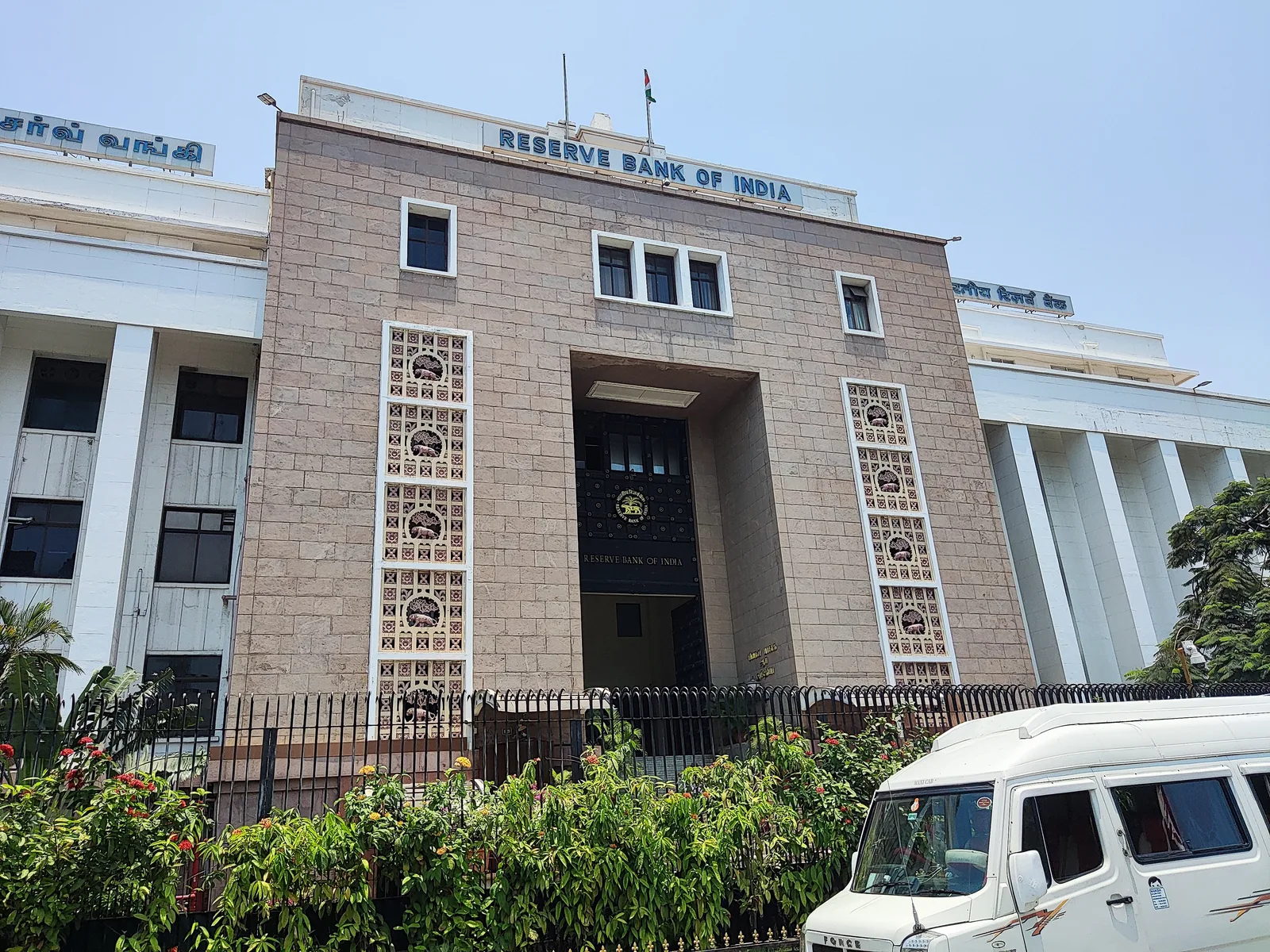
India’s central bank is taking away most of banks’ room to run short of cash on any one day, a further tightening in a week in which it also raised its policy rate and announced a bond sale.
From the fortnight that begins on 16 October banks must hold at least 99% of their required cash reserve at the Reserve Bank of India every day, up from 90%. The requirement averages ₹8,17,219 crore a day, so the room to fall short one day and make it up on another shrinks from ₹81,722 crore to ₹8,172 crore.
It is a floor banks have often been under. Together they held less than 99% on 85 of the 190 days since 1 April, according to Kiwaro’s calculations from the RBI’s daily money-market figures. On 8 October they were ₹18,688 crore short of it.
Overnight money still trades below the rate the RBI sets. The call rate averaged 5.30% on 8 October, 20 basis points under the 5.50% policy rate set the day before. On 4 September, two days before banks’ surplus cash peaked at ₹11.16 lakh crore, it was 85 basis points under.
The surplus was down to ₹3.88 lakh crore on 8 October. The RBI sold ₹1 lakh crore of bonds in September, will sell ₹25,000 crore more on 13 October and will hold a three-day auction to absorb ₹2 lakh crore on 12 October, Business Standard reported.
“On a review of the current liquidity conditions, it has been decided to increase the minimum daily maintenance of the CRR from 90 per cent of the requirement to 99 per cent,” the RBI said, The Economic Times reported.
The tool it has not used is the ratio itself, which stays at 3.0%. Deutsche Bank’s Kaushik Das said the RBI may raise it “as a last resort” if other measures fail to absorb enough cash, Bloomberg reported on 1 October.
What we think it is for
Kiwaro’s view is that the rule is aimed at the gap, not at the surplus. The surplus has already fallen by 65% from its peak. What is left is overnight money 20 basis points under the policy rate, and a floor that banks were under on 45% of days takes away the slack that lets it stay there.
Three-month money moved first
Further along the chain the cost has already risen. Banks paid 6.58% on three-month certificates of deposit on 1 October, up from 5.84% on 4 September. The cut-off at the weekly auction of 91-day Treasury bills was 5.57% on 7 October, up from 5.26% on 2 September. The policy rate did not move until 7 October.
Companies borrow at the next link. On 1 October 259 of them had 1,983 commercial papers running, and 1,307 of those, 66%, fall due by the end of December, by Kiwaro’s count from the depository’s list. The busiest week starts on 3 December, when 176 papers of 101 issuers come due. Stock brokers account for about 21% of this year’s issuance, Bloomberg reported on 5 October, citing primedatabase.com.
Beyond paper, Kiwaro’s map of the money chain, as it stood on 1 October, reaches 880 of the 1,287 companies it follows, 808 of them through short-term borrowings in their accounts. For the middle listed borrower outside finance, one percentage point on its borrowings equals 0.9% of profit; for one in ten it is 5.9% or more. That is a sensitivity, not a forecast.
The chain, link by link
| Link | Latest reading | A month earlier | Next date |
|---|---|---|---|
| Banks’ cash against a 99% floor | 96.7% on 8 October | under 99% on 85 of 190 days since 1 April | 16 October, the floor begins |
| Overnight call rate against the policy rate | 20 basis points under | 85 basis points under on 4 September | 12 October, the three-day auction |
| Three-month certificates of deposit | 6.58% on 1 October | 5.84% on 4 September | 13 October, the bond sale |
| 91-day Treasury bill auction | 5.57% on 7 October | 5.26% on 2 September | 14 October, the next auction |
| Companies’ commercial paper | 1,983 papers of 259 issuers | 66% due by the end of December | 3 December, the busiest week |
Data note: RBI daily money-market figures and Treasury bill auctions, benchmark rates for certificates of deposit, and the depository’s list of commercial paper as of 1 October; the chain and the counts are Kiwaro’s.
Still, the rule adds nothing to what banks must hold. The ratio is unchanged, and since 1 April banks have held 100.3% of the requirement on average. Cash moves between days, not into the RBI.
The RBI last set the floor at 99% in July 2013, amid volatility in the foreign exchange market, Business Standard reported. The call rate, 7.21% on 15 July that year, was 10.03% two weeks later, RBI figures show. The two moved together; we claim no cause.
What to watch
12 October: the three-day auction to absorb ₹2 lakh crore.
13 October: the sale of ₹25,000 crore of bonds.
16 October: the first day under the 99% floor.
3 December: the busiest week for commercial paper begins, a day before the next rate decision on 4 December.
How we counted: cash, requirement, overnight rates and auctions are the RBI’s published figures, for all scheduled commercial banks together; the rule applies bank by bank, and a bank’s daily balance is not public. Commercial paper is counted from the depository’s list of 30 September. The rule, the auctions and the quoted words are as reported by the outlets named.
Institutional perspective: the first day under the 99% floor is 16 October.