A reduction in import duty can improve the price of the next shipment while making the previous one harder to sell profitably. That timing problem sits between India’s edible-oil tax cut and the eventual benefit to food manufacturers and households.
The government reduced basic customs duty on crude palm and soybean oils from 10% to 5%, and on their refined equivalents from 32.5% to 27.5%, according to The Economic Times. It removed the 10% basic duty on crude sunflower oil and reduced the refined sunflower rate to 22.5%. The changes were reported as effective September 24. These are customs rates, not percentage reductions in the final price of food. duty report
Kiwaro’s rate comparison shows a five-percentage-point cut for crude palm and soybean oil. That halves the stated basic duty, but it does not halve landed cost. The commodity price, currency, freight and other applicable levies remain part of what an importer pays.
The benefit travels through inventories
An importer holding higher-cost stock faces competition from goods brought in under the lower duty. A food producer may continue consuming that older inventory before cheaper purchases affect its cost of goods sold. A retailer can retain products manufactured under either cost regime. Those stages need not adjust on the same day.
The result can be a temporary squeeze at one point in the chain and relief at another. It is not automatically an inventory write-off: that would require the actual carrying value, expected recoverable selling proceeds and applicable accounting assessment. Nor does the tax change guarantee wider margins for every refiner, whose crude and refined import alternatives face different duty rates.
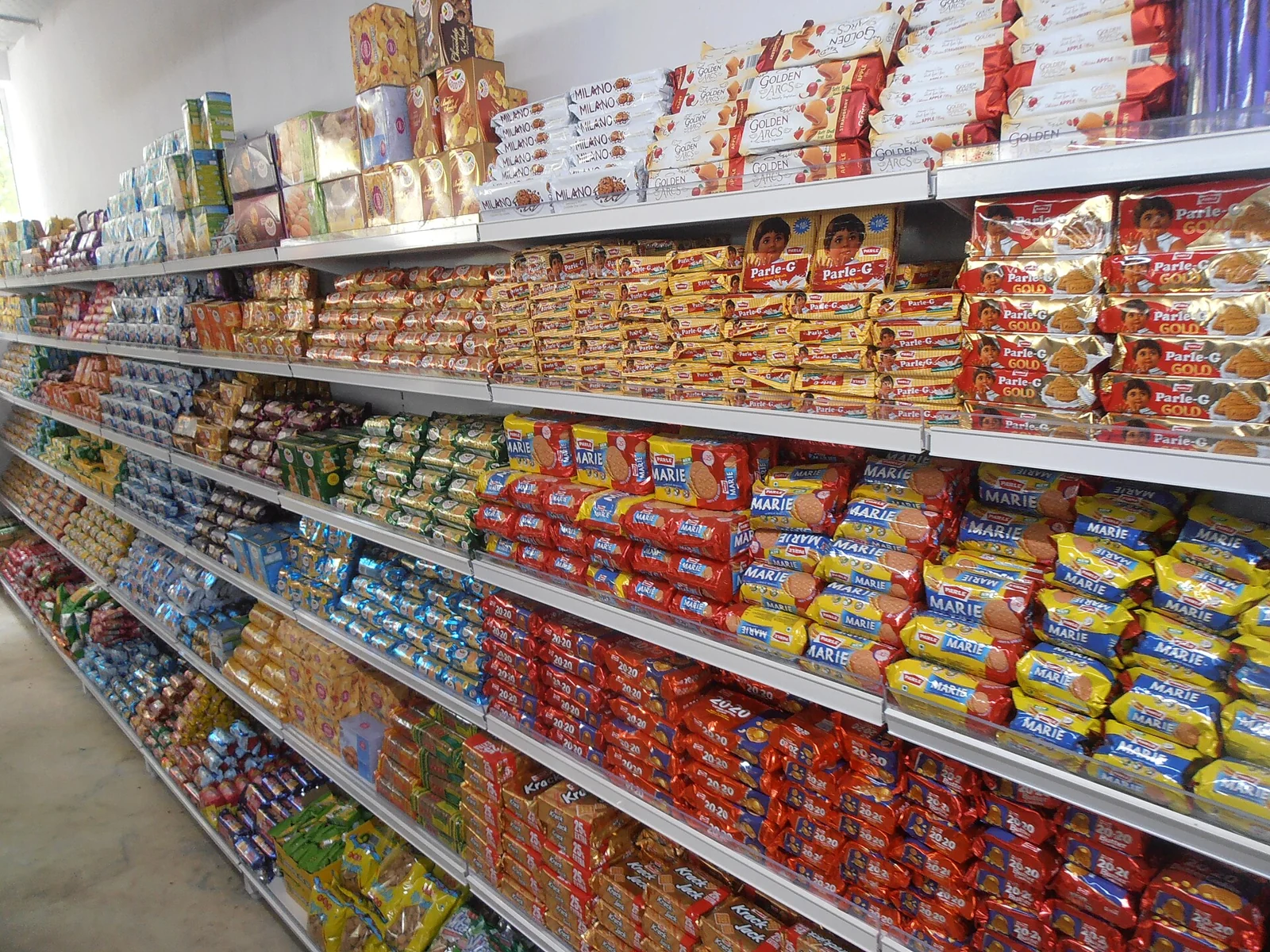
For consumer companies, management still decides how to use lower input costs. BusinessLine reported that Bikaji expected relief in oil costs but initially intended to rebuild margins rather than increase pack sizes. Its September 30 report also described earlier pressure on small-pack economics across the snacks and biscuits industry. Those observations are company and industry reporting; they do not establish a quantified benefit for every producer. Report on manufacturers’ pricing choices
A business can lower the sticker price, add product to a fixed-price pack, run promotions or retain more of the saving. The consumer’s effective price per gram changes differently under each response. An unchanged ₹10 price therefore says little by itself about whether input-cost relief has been passed through.
The institutional calculation begins with the relevant oil’s share of production cost, purchase terms, inventory turnover and actual pricing response. Applying the customs-rate reduction to total revenue would skip all four. Extending the same benefit to every palm-derived industrial input would also ignore the scope of the duty change.
The next evidence should come from procurement costs, inventory movement and pack-level prices. Together they can show whether the tax reduction has restored margins, arrested further shrinkage of packs or intensified price competition.
The policy creates room for relief. Which business captures that room depends on when it buys, how quickly it sells and how much pricing freedom it has left.