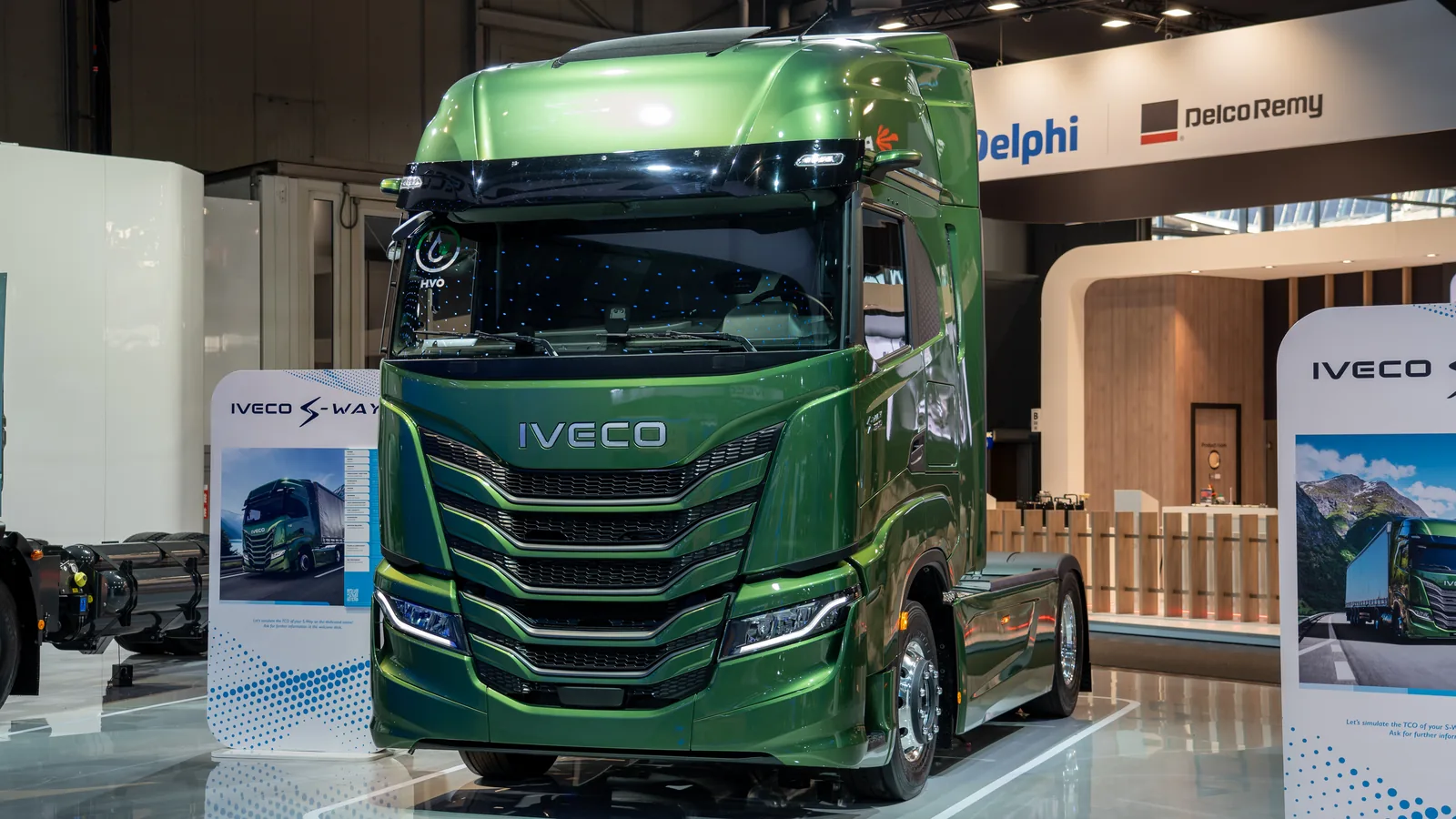
Tata Motors has an explanation for the extra €81.4 million it is offering for Iveco. The numbers have a better one.
The explanation came at a quarter past ten on Friday night, in a filing to India’s stock exchanges. The company was raising its cash offer for the Turin-based maker of trucks, buses and engines from €14.10 a share to €14.40, it said, in consideration of a “slight delay”: approvals in a few countries had taken longer than expected.
That is true as far as it goes. It does not explain the timing. The approvals in question covered Iveco’s financing arms. Britain’s regulator signed off in January, Spain’s central bank in June and the European Central Bank, last of all, on 1 September. Three days after that last signature, Tata Motors published its offer at the old price and said that every clearance it needed was in hand. Its managers had walked investors through the timetable as early as 12 August. Nothing about the approvals changed between the day the offer opened and the night the price went up.
What changed was the count
Iveco’s shareholders have had since 7 September to hand over their shares, with their own board unanimously urging them to. By Friday evening, nearly five weeks into a seven-week offer, 28.44% of the company had been tendered, by the Milan exchange’s daily count. Almost all of it came on one day. On 17 September alone 73.4 million shares arrived, 27.07% of Iveco and almost exactly the stake that Exor, the Agnelli family’s investment company and Iveco’s largest shareholder, had pledged before the offer began. Take that day out, and five weeks of tendering add up to 1.4% of the company. On Friday itself the count rose by 14,456 shares, about €200,000 worth, in a purchase of €3.9 billion.
Tata Motors needs 95%, or 80% if Iveco’s shareholders pass a resolution at their meeting on 16 October.
A thin early count is not a verdict. An acceptance, once given, cannot be taken back unless a rival bidder appears, so professional investors seldom give one before the final days. The tell was the share price. Iveco closed in Milan on Friday at €14.40, the Italian news agency Radiocor reported: 30 cents above the offer then on the table. A share that trades above a cash bid belongs to people who expect a better one, and anyone who simply wanted out could get more from the market than from Tata Motors. That evening, after the close, the better bid came. It was €14.40, to the cent.
So the 30 cents reads better as the price of a stand-off than as payment for a wait. As payment for a wait it is even plausible. When the purchase was announced, in July last year, it was expected to close around April. The money is now due at the end of October, and 30 cents on €14.10 is roughly what the cash would have earned in those six months at a little over 4% a year. But the lateness was known in full on the day the offer opened at €14.10. What the five weeks since have added is the market’s answer.
Two words that matter more than the money
None of this is a criticism of the move. A buyer whose bid sits below the market price can hold its nerve or pay up, and Tata Motors paid up in the cheapest way available: one step, to exactly where the shares already stood. Then it added two words. The new price, the filing says, is its “best and final” offer and will not be raised again.
Those words are the real news. Until Friday, a shareholder who held back could wait for more. Now Tata Motors has said in writing that there is no more, and its offer papers spell out what holding out earns if the purchase goes through anyway: the same price, paid later and without interest. Only a Dutch court could award more, and the law there presumes the offer price is fair once nine-tenths of the shares have been bought.
The calendar is short. Exor, with 43.19% of the votes, is bound to back the resolution on 16 October. The offer closes on 26 October and the money is due on 30 October. If acceptances stop short of the line, Tata Motors may waive its own condition, but not below two-thirds of the shares. Below that there is no purchase at all.
Is €14.40 a reasonable place to stop? The buyer said in the same breath that €14.10 was already “a full and fair valuation”, and its own tables lend the claim some support. The new price is 16.7 times Iveco’s earnings for 2025, against a median of 17.1 for the four listed truck makers in the same tables, and it is 33.47% above where the shares stood before word of Tata’s interest got out. Tata Motors is paying roughly what the market pays for Daimler or Volvo, for a business that Crisil, the rating agency, has described as earning thinner margins than its global rivals.
The bill arrives in Mumbai
If the holdouts come in, Tata Motors has to pay, and every euro is borrowed. A bridge loan of up to €3,825 million from Morgan Stanley and MUFG stands behind the original price. A fresh €85 million from MUFG’s branch in GIFT City covers the 30 cents. Together that is about ₹42,470 crore at ₹108.62 to the euro, half of what the company sold in the year to March.
The borrower is not the Tata Motors most people picture. It is the truck and bus maker left after the split from the car business a year ago: ₹83,855 crore of revenue, 88% of it earned in India, and at the end of June ₹13,500 crore more cash than debt by its managers’ count. Its interest bill was ₹874 crore last year and falling. In the June quarter it was ₹135 crore. Each percentage point of interest on the Iveco loans would add about ₹425 crore a year.
What it is buying is bigger than itself and less profitable. Together the two companies sell more than 590,000 vehicles a year for some €21 billion, of which Europe would supply 46% and India 32%. A company that earns 12% of its revenue abroad would earn two-thirds of it there. Crisil, which rates Tata Motors’ debt, put Iveco’s operating margin at 5.3% in 2024, against about 9% for Tata’s own trucks, and expected the return on capital to come down to about 20% for the combined business, from about 37% for Tata’s alone.
The quick routes to savings are closed for now. For two years after it pays, Tata Motors has promised to shut no Iveco plant and to keep the headquarters in Turin, and it says it plans no job cuts because of the deal. By the companies’ own account the gains must come from buying parts together and from spreading investment over more vehicles. For suppliers to both, that means a bigger customer.
Who pays
A bridge loan is temporary by design, and what replaces it decides who finally pays for Iveco. The plan on record is the one Crisil described in August 2025 and again that November: the bridge is to be replaced within 12 months, 70% by long-term debt and 30% by equity. On loans of up to €3.9 billion, 30% is about €1.2 billion, or roughly ₹12,700 crore. The agency’s word for that equity was “critical”.
Equity comes from owners. Tata Sons holds 40.1% of Tata Motors, and 40.4% once shares held through companies it part-owns are counted. Five institutions (Life Insurance Corporation of India, three large mutual fund schemes and the Government of Singapore) held 12.9% between them at the end of June. A further 43.2% belongs to holders the filing does not name. Look one step further, at who owns the companies that own Tata Motors, and little changes: another 0.25% of the company comes into view, and most of it leads back to Tata Sons.
So the arithmetic of any call on shareholders is simple. If new shares are offered to all in proportion, two of every five rupees must come from Tata Sons, and every other holder has to write a cheque just to stand still. If the shares are sold to newcomers, every existing slice shrinks. There is a third way, and it has a precedent: Crisil records that Tata Sons put ₹6,500 crore into the old Tata Motors in the financial years 2019 and 2020, lifting the promoter group’s stake from 38.37% to 45.82%. Everyone else’s share fell. Tata Sons has the largest say in which it will be. Three-fifths of the bill, and of the prize, belongs to everyone else.
Against all this the 30 cents is small change: about ₹884 crore, 2.1% on the price. The dates that matter come quickly. On 16 October Iveco’s shareholders vote. On 23 October Tata Motors’ board meets on its September-quarter results, and its managers face investors the same day. On 26 October the offer closes. Until then the Milan exchange publishes the count every evening, the one number in this deal that nobody gets to draft.
For Tata Motors’ own shareholders the question is not whether 30 cents was too much. It is the one Friday’s filing leaves out: when the bridge comes due, how much of it is repaid with new debt, how much with the company’s own cash, and how much with their money.
Data note: Offer terms, conditions, loans and timetable are from Tata Motors’ filings to the stock exchanges of 1 September, 5 September and 9 October 2026 and its results call of 12 August. Acceptance counts are the Milan exchange’s daily figures as carried by the agency Teleborsa; the closing price is as reported by Radiocor. The expected closing date, the plan to replace the bridge loan, Iveco’s margins and the return on capital are from Crisil’s rating notes of 8 August and 26 November 2025. Tata Motors’ revenue and interest costs are from its filed accounts for the year to March 2026 and the June 2026 quarter; its holders are from the shareholding filing for 30 June 2026. Rupee amounts use the euro reference rate of 1 October 2026. The sum for new equity is our arithmetic on the ratio in the rating notes; the filings cited here do not say how the bridge loan will be replaced. This article replaces a version published earlier the same day.
Institutional perspective: For holders of Tata Motors the dates are 16, 23 and 26 October, and the open item is the mix of new debt, the company’s own cash and fresh equity that replaces the bridge loan.