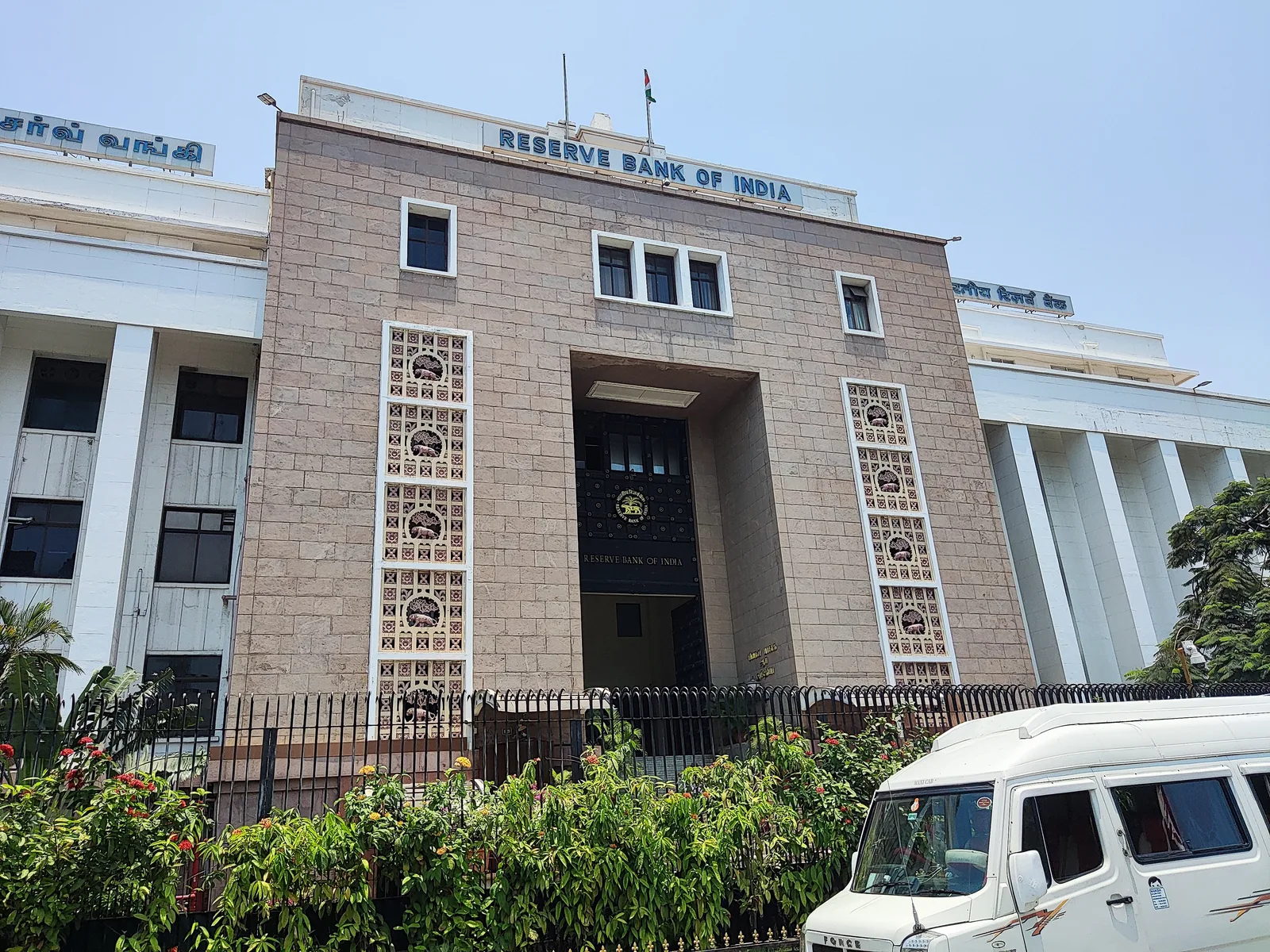
India’s central bank rewrote the rules of its currency market on Saturday. In two circulars and a three-sentence notice, the Reserve Bank of India made it dearer to buy dollars forward, impossible to cancel a hedge and book it again, and unnecessary for the three state oil companies to enter the market at all. The window for the oil companies opens today.
The reason is in its own weekly table. In the week to 2 October the foreign exchange reserves fell by $12.95 billion, to $734.6 billion. Foreign investors have taken ₹44,166 crore out of Indian shares so far this month and more than ₹3 lakh crore this year, by the figures Business Standard carried on Sunday. The policy rate has already gone up, to 5.50%. What was left was the plumbing.
A reserve aimed at one kind of buyer
Start with the new reserve, which has been described as a cash ratio on currency deals. The circular is narrower than that, and harder. It catches one kind of contract: a hedge of more than $2 million in which a customer buys foreign currency for a current-account payment. That is, above all, an importer’s forward cover. For each one the bank must place 20% of the rupee value in cash with the central bank, every day, until the contract ends. Splitting a deal to slip under the line is itself a breach. A company hedging the principal of a foreign loan is not caught. Nor is an exporter selling dollars.
The circular says nothing about interest on that cash. If it earns none, the arithmetic is short. At the policy rate, cash idle for a year costs the bank 1.1% of the contract, about 27 paise on every dollar an importer covers for three months at Friday’s reference rate of ₹96.73. At the $2 million line that is ₹3.87 crore of cash for a single contract. A cost like that goes into the price of cover, or the cover is not bought.
The end of cancel and rebook
The second measure reaches further, because it catches everybody. A forward contract cancelled after Saturday cannot be booked again, with any bank. The central bank’s turnover table for 21 to 25 September, the latest it has published, shows what that ends. In those five days banks and their customers struck $35.9 billion of new forward contracts and cancelled $19.6 billion of old ones: $55 cancelled for every $100 struck. Customers bought 43% more dollars forward than they sold. Cancelling and rebooking is how a treasury can trade the rupee’s direction under the name of hedging. That is over. And the size above which a company must prove what it is hedging has dropped from $100 million to $5 million.
That lower line is where the measures meet India’s foreign borrowers. On the central bank’s register of foreign loans, 4,246 companies owe $272.6 billion, by our arithmetic on what is still running. Only 296 of them owe more than $100 million. Count those who owe more than $5 million and the number is 1,607. So 1,311 borrowers who could hedge their whole loan on their word last week must now show the paper for all but the first $5 million, and tell every bank what they have booked with the others. They carry 12.0% of the debt. The 296 above them, with 86.5%, were already showing it for whatever they hedged beyond the old line.
The banks appear twice
Follow those borrowers one step further and the banks appear twice. They sell the hedge, and they hold the loan. We could match 237 of the foreign-currency borrowers, owing 45.9% of that debt, to their rated bank facilities. HDFC Bank is named as a lender to 104 of them and State Bank of India to 102, ICICI Bank to 92 and Axis Bank to 85. On average each has between five and six of India’s banks behind it.
A company that hedges less, because cover is dearer or because a cancelled contract cannot come back, does not make its risk disappear. It carries the risk unhedged, and its lenders carry the company. The cost of the defence travels from the importer’s treasury towards the lender’s balance sheet.
The oil companies leave the market
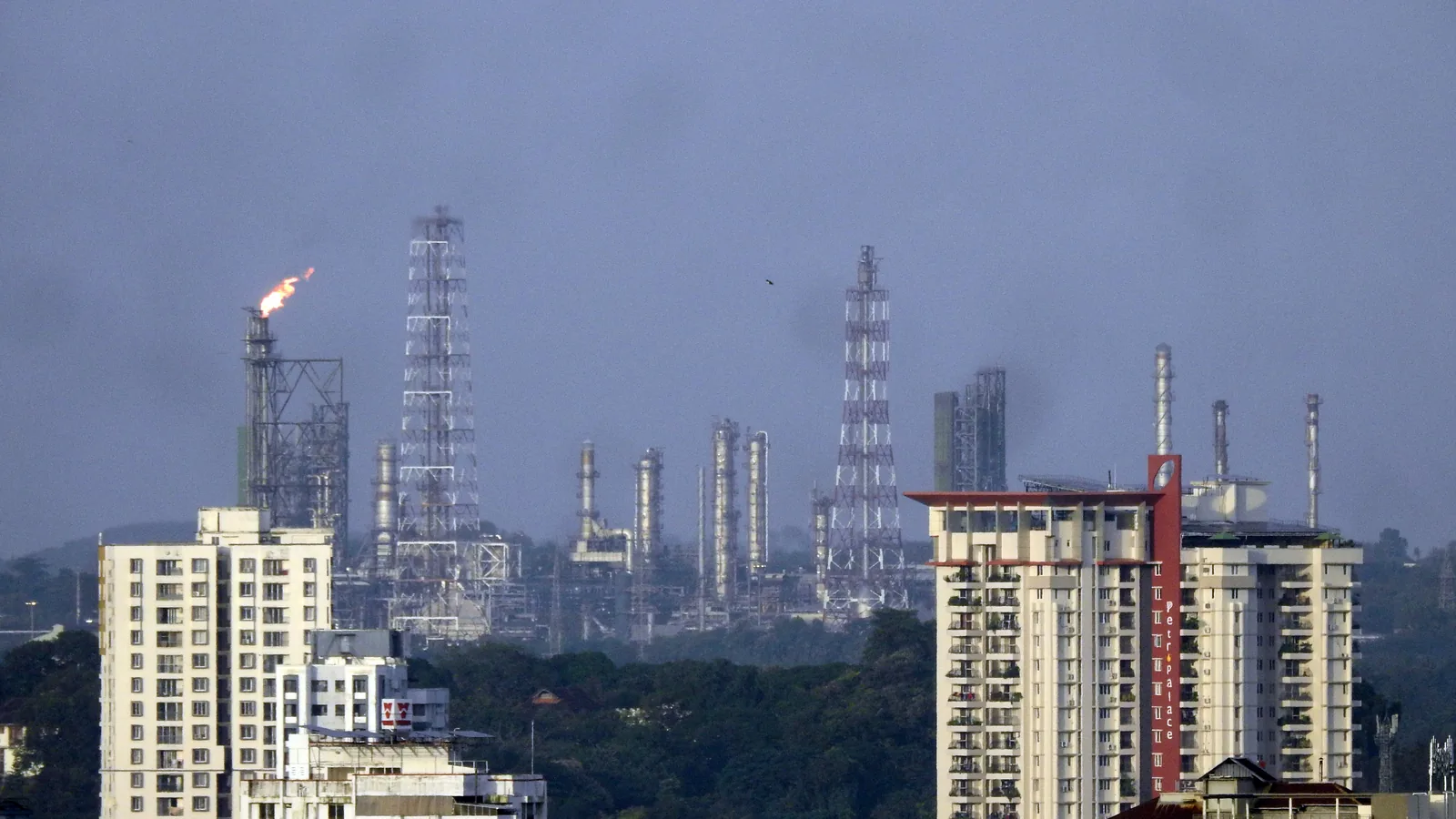
The oil window is the simplest piece and the most revealing. From today the Reserve Bank sells Indian Oil, Bharat Petroleum and Hindustan Petroleum all the dollars they need, through chosen banks, until further notice. The Economic Times puts their crude bill at about $207 million a day. That is roughly 3% of the dollars banks sold to customers for immediate delivery each day in late September: small in the market, and relentless in one direction. It now leaves the market and lands on the reserves, about $1 billion a week, after a week in which the reserves lost more than twelve times that.
The defence also takes rupees out of the banking system, three ways. Dollars sold from the reserves are paid for in rupees. The new reserve is cash. And on Tuesday the central bank sells ₹25,000 crore of government bonds from its own book, a sale it announced on Friday. A central bank that has just raised its rate is tightening again by other means.
Analysts have called this the playbook of 2013, the year of the taper tantrum. A defence of this kind buys time for something else to change. It buys time now. It does not make oil cheaper or bring a foreign investor back. It moves the cost of a weak rupee from the exchange rate, where everyone can see it, to importers’ hedging bills, banks’ idle cash and the reserves, where few look. That may be the right trade. It should be called what it is.
Three readings will show how it is going. On Tuesday, the bond sale. On Friday the weekly table is due with the reserves as of 9 October, the last reading before the window; the one a week later covers the first week with it. And the turnover table for this week, published about a fortnight after it ends, will show whether importers’ forward buying has shrunk or only moved.
Data note: The measures are quoted from the Reserve Bank of India’s A.P. (DIR Series) Circulars No. 25 and No. 26 and its two press releases of 10 October 2026. Reserves are from its Weekly Statistical Supplement of 9 October; turnover from its Foreign Exchange Turnover Data for 21 to 25 September, read as banks’ sales to and purchases from customers. The cost of the reserve is our arithmetic on the policy rate and the European Central Bank’s reference rates of 9 October, and assumes the cash earns no interest. Foreign borrowers are from the Reserve Bank’s monthly register of foreign loans; their lenders from the rating agencies’ published notes, matched on the exact legal name, which reaches 237 borrowers and 40 banks and no foreign bank. The oil companies’ daily bill is The Economic Times’s estimate.
Institutional perspective: For holders of India’s banks the measures add idle cash on import cover and the risk of more unhedged exposure among borrowers; for importers outside oil, a dearer hedge that cannot be undone and redone. The dates are 13 October, 16 October and 23 October.